TIME is VERY bullish on stimulus.
How to stop illegal advertising.
Sun may affect radioactive decay rates.
Showing posts with label roundup. Show all posts
Showing posts with label roundup. Show all posts
Wednesday, 1 September 2010


Tuesday, 24 August 2010
Links for 24 August
Greeks were tacky.
Lazy 20-somethings are now "emerging adults."
"Council hires ban bid taxi firm" -- one of the all-time great crash blossoms?
Jazz up your game of hangman.
Need some perspective?
Intelligent parking. (Plus, a roundup of parking policy from MR)
Lazy 20-somethings are now "emerging adults."
"Council hires ban bid taxi firm" -- one of the all-time great crash blossoms?
Jazz up your game of hangman.
Need some perspective?
Intelligent parking. (Plus, a roundup of parking policy from MR)
Wednesday, 11 August 2010
Short stuff for 11 August
It appears Marc Hauser has been making things up. This sort of news just makes me sad.
What happens when you get rid of traffic lights? Order ensues. (M/R)
A graphical illustration of a PhD (via Uncertain Principles). If you're in grad school, spend a minute on the site -- it contains a number of good tips for writing PhD proposals, hunting jobs, and being productive.
A nice history of ecology. (via Evolving Thoughts)
I hate periodic tables of anything but elements. It is ironic, then, that a faux periodic table is so effective in organizing conceptual links between different kinds of visualizations (h/t Kottke).
Sunday, 29 June 2008
29 June roundup
A week of extremely exciting excerpts:
- Americans arrested abroad: Tijuana, Guadalajara, Nuevo Laredo, London, Mexico City, Toronto, Nassau, Mérida, Nogales, Hong Kong. 7 of the top 10 crime hotspots for Americans are in Mexico.
- Cloned T cells kick cancer.
- Proprietary bacteria poop petroleum. [/.]
- Bumper stickers bespeak bad behaviour. Other drivers get mad, but don't act out.
- Comedy crushes Communism, via 3QD: "'Is it true that Marxism-Leninism is scientific?' 'No, surely not. If it were, they would have tested it on animals first.'"
- Major microscopic mutation materializes: evolution in the lab
- Terrifying trippy tune: thousand-year time travel [via, inspired by]
Sunday, 22 June 2008
22 June roundup

- Forget abstinence only:more sex is safer sex.
- Speaking of sex, Pisani's book The Wisdom of Whores has a lesson for social science: "I had the impression from the qualitative research...that waria were turning dozens of tricks a week, but [a quantitative] study showed they averaged only three. And since that figure came from 250 waria selected at random as the manual requires, it was certainly more accurate than the qualitative research..." The problem? Systematically bad sampling: "a waria who is hanging around on a street corner to be interviewed by a research team is a waria who is not with a client. 'You are talking to all the dogs, obviously.'"
- Blowing out the birthday candles just got awesomer. [via]
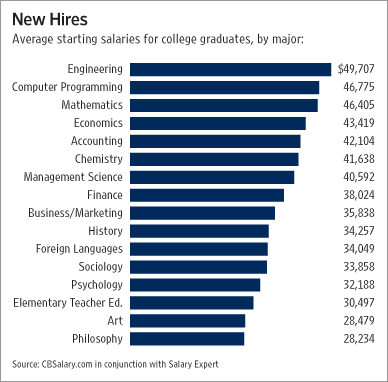
- Philosophy majors are on the rise. Pay, not so much. Why, then? Well, “That whole deep existential torment.... It’s good for getting girlfriends.”
Tuesday, 10 June 2008
june 1 roundup
[obviously, this post is ill-named. I intended it to appear on June 1 while I was on the road to Vancouver for CSHPS, the Canadian Society for the History and Philosophy of Science, conference, of which more later. That didn't happen. Indeed, I missed a whole 'nother Sunday since. And yet, I have not changed the name. Go figure.]
- A computer bug is partially responsible for the housing credit bubble. Or else someone would like us to think that's the case.
- Optical computing gets closer.
- The secret to good sci-fi? Low budget. Probably because then it is a labor of love, and movie executives have less sway.
- Is it wishful thinking to hope that a sea of plastic trash plus plastic-decomposing bacterial equals unicorns and rainbows?
- I will derive
Sunday, 25 May 2008
may 25 roundup
- Tomato Genetically Modified To Be More Expensive.
- grade inflation: "I am going to warn you one last chance I am going to ask I want a better than a B-. If I see this [grade] I swear to god I am going to f---ing put you in a wheelchair when I see you..."
- We must LOL, and so we shall. [via Torontoist]
- What to do about high tuition costs at wealthy institutions: tax them! Uh, no. If the idea is to induce Harvard to lower tuition, don't ask for a share of their profits (which induces them to pass on their new tax burden to students by raising tuition). Lower Harvard's tax burden by a function of the difference between Harvard's tuition and the tuition at the University of Massachusetts. Use the revenues to subsidize UMass and further lower tuition there. That's a winning combination.
- In other Massachusetts-related news, Jake Young gives us some of the science behind Senator Ted Kennedy's glioma.
- Should we remove legal barriers to establishing low stakes prediction markets? Perhaps, but I predict we won't. Hah! See what I did right there?
- Chemistry rocks.
Sunday, 18 May 2008
may 18 roundup

- Rate Your Students (hat tip to regular reader Zac)
- One potential solution to the problem of invasive species? Microwave them to death! Via /.
- Something new from Gladwell: on Myhrvold's "invention factory"
- Rubik's cube too easy? Try megaminx, the 4-D version.
- Or have a look at a life-size photo of a blue whale. Via /.
- Understand quantum theory but not US politics? (or vice-versa?) This may help: "Transactioner: 'If I vote for Nader, it won't lead to Bush winning the election, because causality is an illusion' Questioner: 'But if you vote for Nader instead of Gore in a close election, aren't you aiding Bush?' Transactioner: 'Bah! You silly Democrats and your respect for chronology. I can just go back in time and change my vote to Gore if Bush wins!'"
Sunday, 11 May 2008
may 11 roundup
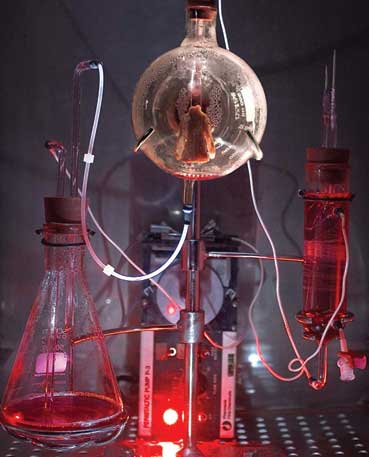
- Is it art, or just gross? MoMA 'kills' a leather jacket.
- Using Photoshop to estimate the number of chickens in Africa.
- Is this question scientific?
- BLDGBLOG says "Unless a 'green' building actively remediates its local environment – for instance, scrubbing toxins from the air or absorbing carbon dioxide – that building is not 'good' for the environment. It's simply not as bad as it could have been."
- Was Yersinia pestis really responsible for the Black Death?
- Colbert and xkcd on the difference between scientists and normal people. [alternate video]
Monday, 5 May 2008
may 5 roundup
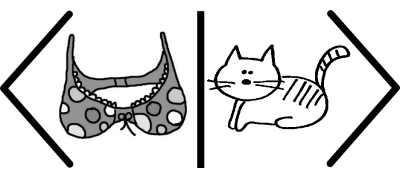
- if you get the joke, you have no right to complain.
- best time to remember? just before you forget.
- the LHC as a spam filter: "the LHC will create about a billion collisions per second, and only about 100 of them will actually get stored on hard disk.... the trigger makes some snap judgments about what events are fun."
- the rationality of single motherhood. Hint: "'Black culture' doesn't explain why the single moms are disproportionately in the states where lots of young black men are in prison."
- how many people are airborne over the US at any given moment? (the art of estimation)
Sunday, 27 April 2008
april 27 roundup

- "In essence, no one really knows today what a kilogram is." [via LA Times]
- son-of-a-bitch mouse solves maze, ruins chances of scientific discovery. [via the Onion]
- "Two things make tall buildings possible: the steel frame and the safety elevator. The elevator, underrated and overlooked, is to the city what paper is to reading and gunpowder is to war. Without the elevator, there would be no verticality, no density, and, without these, none of the urban advantages of energy efficiency, economic productivity, and cultural ferment." [via New Yorker (long, but worth it)]
- "I’m afraid I have some bad news for you: You walk wrong." [NY Magazine (very long, worth skimming)]
- Oh, Internet, how I love thee:
Sunday, 13 April 2008
April 13 Roundup

- Incomes grow faster in all sectors under Democrats, but disparity grows faster under Republicans [from, via]
- Forget about those 8 glasses of water.
- The French are upset; the English are underusing the semicolon.
- "Instead of [foot patrols] watching to prevent crime, motorized police patrol became a process of merely waiting to respond to crime." [from]
- More from the unintended consequence files: some municipalities have decided to "reduce the yellow-light period and increase ticket revenue." [from]
- One of the oddities of American politics is the partisan split on education. Democrats, who traditionally favor nationalized programs, align themselves with the National Education Association in supporting local control for public schools, while it is the Republicans--traditionally favoring local regulation--who have recently enacted national education standards. Almost everyone I talk to agrees No Child Left Behind is a terrible plan, but Sean says (and I agree) national standards could be a Good Thing.
- John Wilkins says science and religion have different epistemologies. In particular, "science is something nobody who is sane and informed can reject," in part because it is universal, while religion is local. As a result, "science constrains rational religion, while no religion, Plantinga notwithstanding, constrains rational science." Possibly it is unfair to compare only rational modes of thought, but (like John, I suppose) I have little patience for systematic irrationality. I'd only add (clarify?) that science is a process, not a product.
- "Semiconductors are like Democrats," in case American politics is less confusing than chemistry.
- why buying from ebay is like a complicated toaster [from, via]
Monday, 31 March 2008
march 30 roundup
 Some amoebas build houses.
10 science effects from Backreaction. I have personally experienced the Pauli Effect, and it isn't fun.
Urban futures. "For the first time in human history, more people now live in cities than don't." The forces of growth put great strain on cities around the world, and they manifest in very different ways. For example, "Mexico City has huge water supply and garbage disposal problems, inadequate transit, bad air quality, overcrowding and a culture of crime and corruption. Through it all, however, the city has never succumbed to its various crises, but carries on despite them." The scale and density of cities allows for many efficiencies, but "cities deliver 80 per cent of the services people expect in their daily lives on 25 per cent of tax revenues. As a result, public infrastructure is crumbling at every turn." With >50% of voters now living in cities, expect that to change fast.
Carl Zimmer says it's still possible to distinguish natural from artificial organisms, in part because scientists insist on inserting their names into the genetic code.
Sage Ross thinks the future of WikiPedia rests on news. Despite "a large--and mostly unmet--demand for internet discussion of news," "the top social news sites are only modestly popular, and there is still plenty of room for new players"--including Wikipedia, he thinks. The trouble is that the market for news commentary is saturated by hundreds of mediocre entrants. Ross predicts a "Wii moment" for Wikipedia. I have my doubts.
/. reports "MIT Review is taking a serious look at China's plans to prevent rain over... the Olympics. From the article: 'China's national weather-engineering program is also the world's largest, with approximately 1,500 weather modification professionals directing 30 aircraft and their crews, as well as 37,000 part-time workers — mostly peasant farmers — who are on call to blast away at clouds with 7,113 anti-aircraft guns and 4,991 rocket launchers.' They plan on demonstrating their ability to control the weather to the rest of the world, and expanding on their abilities in the future."
And finally, via Seed's Daily Zeitgeist:
Saturday, 29 March 2008
saturday medley
Why have burglaries declined? Simple: supply and demand. "There's just too much on the street already."
The Bad Movie Science report card has many of the problems with any grading system: it is capricious, homogenizing, and plainly wrong.
Is war inevitable? Only when there's scarcity, pestilence, or gender, race, and class inequality. So, yes, then?
Need a jump-start on building your ownprocrastination aid blogroll? Check out shyftr's list of science blogs.
What is the key to success in science? Not beer. "After years of argument over the roles of factors like genius, sex and dumb luck, a new study shows that something entirely unexpected and considerably sudsier may be at play in determining the success or failure of scientists — beer." Fortunately, that study seems to have sample problems, and I'm going to go ahead and assume that the effect is illusory.
The Bad Movie Science report card has many of the problems with any grading system: it is capricious, homogenizing, and plainly wrong.
Is war inevitable? Only when there's scarcity, pestilence, or gender, race, and class inequality. So, yes, then?
Need a jump-start on building your own
What is the key to success in science? Not beer. "After years of argument over the roles of factors like genius, sex and dumb luck, a new study shows that something entirely unexpected and considerably sudsier may be at play in determining the success or failure of scientists — beer." Fortunately, that study seems to have sample problems, and I'm going to go ahead and assume that the effect is illusory.
Sunday, 23 March 2008
the kitten caboodle

- Garfield minus Garfield
- relative noir (APS News)
- room-temperature superconductor--the key? Super compression (EE Times).
- methane on another planet (Wired)
- briefs: how to measure the speed of light (Skulls in the Stars)
- Tenure: the movie (Inside Higher Ed)
- update -- Stuff White People (in Toronto) Like (Torontoist)
- a phone with a peel? (From Sarah)
Sunday, 16 March 2008
march 16 roundup - how to flirt in a burqa

- Better living through technology: a burqa that keeps you covered... but sends pictures of your face to bluetooth-enabled mobile devices.
- “Buffalo buffalo Buffalo buffalo buffalo buffalo Buffalo buffalo” is a sentence with better grammar than most of mine.
- Coffee makes you more susceptible to arguments--but only good ones. "Is an increase [sic] understanding of other people's arguments worth the price of being more easily convinced?"
- Transportation Safety Administration has a blog. It's pretty good, and not at all written by trolls.
- W on art: hero, scalawag, what's the dif? "W does what he always does when he has no clue: he pulls something out of his ass and presents it as fact, and even becomes so convinced of its veracity that he completely disregards all evidence to the contrary."
- Online or offline, some neighborhoods are just better. "Outside.In, a website designed to gather and organize neighborhood news, published a list of “America’s Top 10 Bloggiest Neighborhoods.” What was striking (but perhaps not surprising) is that all were living examples of the kind of places Jacobs championed: Clinton Hill in Brooklyn, Portrero Hill in San Francisco, Shaw in Washington. If the physical form of a neighborhood is conducive to community, so is its virtual form."
Saturday, 1 March 2008
rapid fire march 1
Some items worth a second look, but not a whole entry:
- parking roundup: "the cost of 'free' parking, up to $35,000 per space, is almost never passed along to the parking users."(related)
- libertarians aren't "really the Nietzschean little sociopaths their arguments are always trapping them into claiming to be." If they weren't so busy being indignant, they might notice that "one of the nice things about being a liberal is that you never need to pretend that you're actually a barbaric hoodlum who only behaves civilly due to fear of punishment from the 101st Airborne."
- Benjamin Cohen has a multi-part series about Objectivity, by Lorraine Daston and Peter Galison. I'll have a few things to say about it myself one day.
- Speaking of Galison, he's compiled a very nice history of physics reading list for PhD general exams. It's worth a look.
- boggle your mind with these color illusions.
- John Wilkins says the recent revelation that "physical features of [Lapita Complex Polynesian] canoes that affected their reliability and efficiency were slower to evolve than the cultural features such as decorations" is unsurprising if we take cultural evolution to be analogous to sexual selection.
Subscribe to:
Posts (Atom)